Botrytis on basil: how to truly prevent and control it
Botrytis, or gray mold, is one of the most frequent and damaging diseases in greenhouse basil cultivation.
It develops rapidly and, if not managed in time, compromises entire productions.
Typical signs are:
- gray mold on leaves
- rot
- soft and deteriorated tissues
When it appears, the problem is already advanced.
Why botrytis affects basil
Botrytis finds ideal conditions in greenhouses:
- high humidity
- poor ventilation
- high plant density
In these situations, the fungus develops quickly and spreads easily.
Common mistake: intervening only when it's visible
Many only treat botrytis when it becomes visible.
At that point:
- the fungus is already widespread
- the plant is compromised
- production is already at a loss
This leads to late and ineffective interventions.
Correct approach: continuous prevention
Botrytis is not managed as an emergency.
It requires:
- constant prevention
- environmental balance
- plant support
The goal is not just to stop the fungus,
but to prevent it from finding the conditions to develop.
Recommended protocol for basil
Preventive phase
Objective: reduce the risk of fungal development.
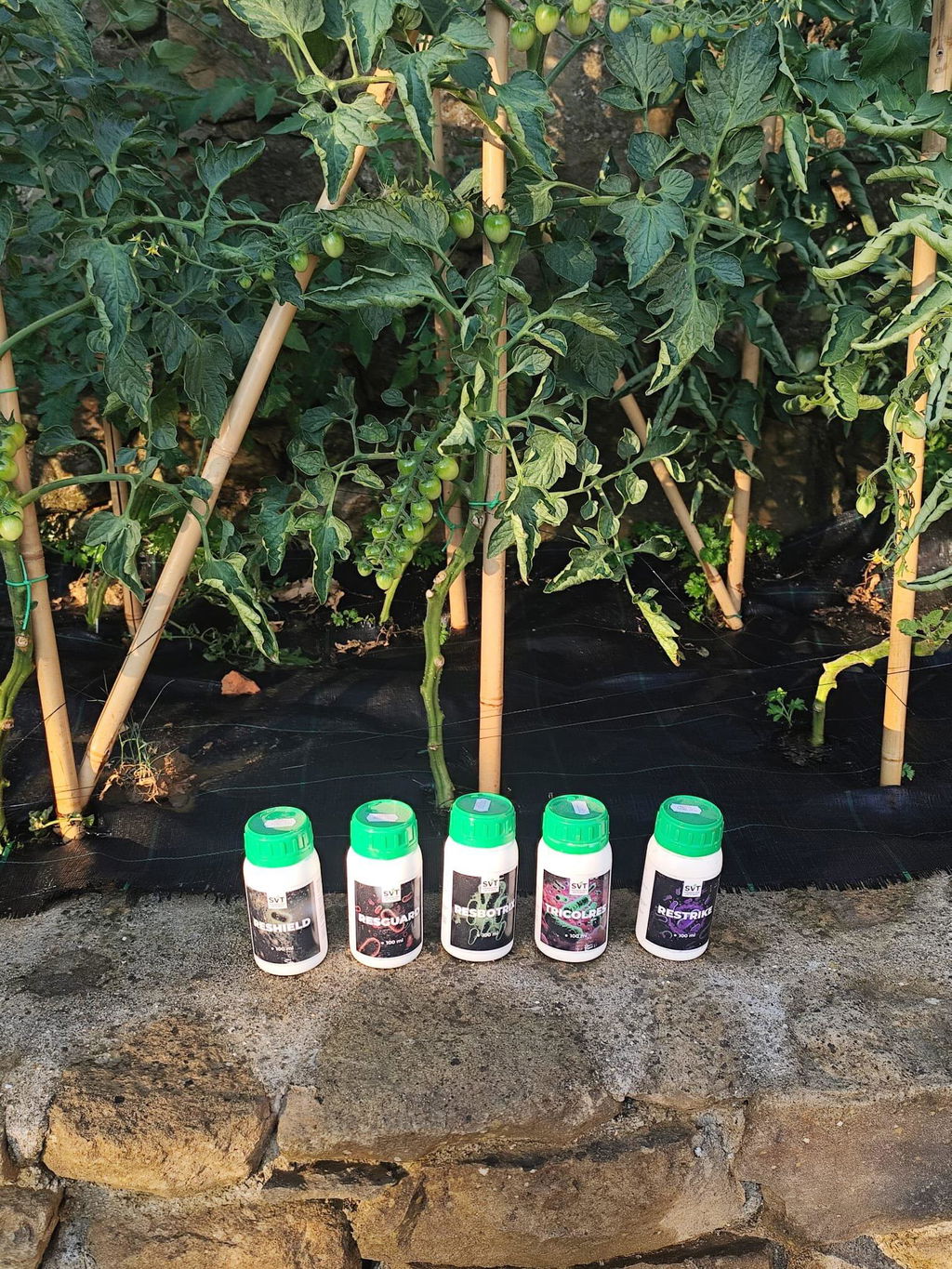
Use of RESBOTRIX
Helps to:
- limit mold development
- maintain balance on the leaf surface
Risk phase (high humidity, favorable conditions)
In the presence of:
- condensation
- temperature variations
- closed environments
- increase the frequency of interventions
Supplement with RESHIELD
To support the plant and reduce stress.
Phase with symptoms present
If botrytis is already visible:
- intervene immediately
- maintain continuity
Continue with:
To contain the spread.
Why continuity is essential
Botrytis develops rapidly.
A single treatment is not enough.
It requires:
- consistency
- environmental control
- regular interventions
Those who intervene only when they see the problem lose production.
Those who prevent maintain control.
Expected results
With proper management:
- reduction of mold
- fewer losses
- healthier plants
- more stable production
Conclusion
Botrytis is one of the most critical problems in greenhouse basil.
Managing it means working proactively, not in an emergency.
The difference is directly visible in the yield.